Why Profit Does Not Mean Cash in Your Bank Account
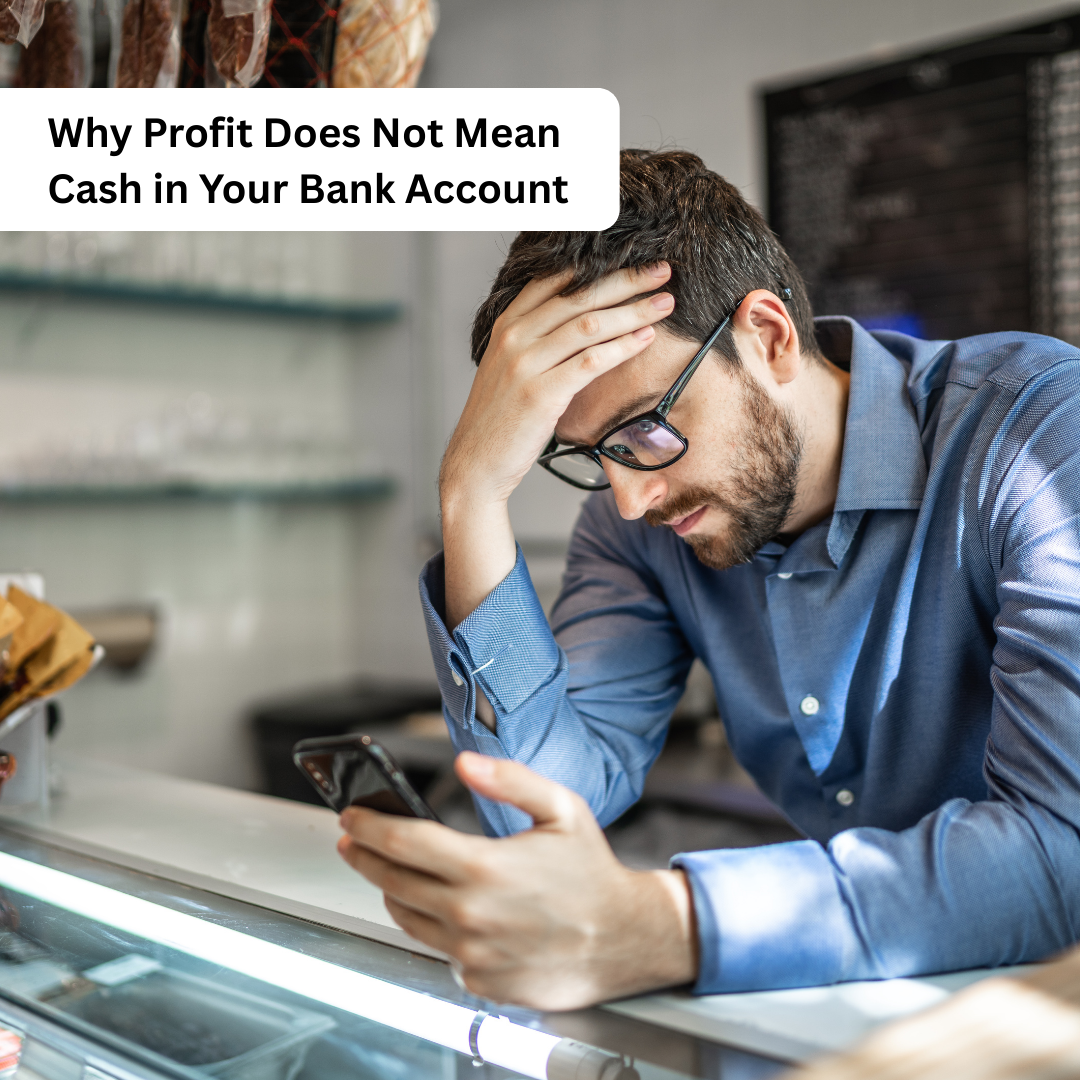
One of the most confusing moments for a business owner is this:
Your Profit and Loss statement shows a great month.
But your bank account does not feel great at all.
You did the work. You made the sales. The numbers say you are profitable.
So why does it feel like the money disappeared?
This is one of the most common misunderstandings in small business finance, and it is also one of the most expensive if you do not understand it early.
Let’s clear it up.
Profit and Cash Are Not the Same Thing
Profit is an accounting number.
Cash is what is actually available in your bank account.
Your profit shows how much you earned after expenses during a period of time.
Your cash shows how much money you can actually use right now.
It is completely possible to be profitable on paper and still feel broke in real life.
The Most Common Reasons Profit Does Not Equal Cash
1. You Have Unpaid Invoices
If you invoice clients and they have not paid yet, that income still shows as revenue on your Profit and Loss statement.
The problem is simple.
You cannot spend money that has not hit your bank account.
This is common in service businesses, real estate, and consulting. Strong revenue with slow-paying clients can create cash stress even during profitable months.
2. Loan Payments Do Not Affect Profit the Way You Expect
When you make a loan payment, only the interest portion shows as an expense.
The principal portion reduces the loan balance on your balance sheet, not your profit.
So even though cash leaves your bank account every month, your Profit and Loss statement does not reflect the full impact.
3. Taxes Are Not Automatically Set Aside
Taxes are not deducted from your profit automatically.
If you are profitable and not setting aside money for taxes, your cash balance will feel tight very quickly when estimated payments or tax bills come due.
This is one of the biggest reasons profitable businesses still panic at tax time.
4. Owner Pay and Distributions Reduce Cash, Not Profit
When you pay yourself, it does not reduce profit the same way an expense does.
Owner draws and distributions lower your cash balance but do not lower taxable income.
That means you can take money out, feel good short term, and still owe taxes on the full profit later.
5. Inventory and Equipment Purchases Drain Cash Upfront
Large purchases often hit cash immediately.
Depending on how they are treated for accounting and tax purposes, they may not reduce profit in the same month.
This timing difference creates a gap between how healthy your business looks and how it feels.
Why This Confuses So Many Business Owners
Most owners only look at their bank balance.
Others only look at their Profit and Loss statement.
Very few understand how the Profit and Loss, Balance Sheet, and Cash Flow all work together.
That is where the confusion comes from.
Once you understand the full picture, the stress drops dramatically.
How to Fix the Gap Between Profit and Cash
You do not need complicated forecasting to improve this.
You need:
Clean monthly bookkeeping
Accurate financial reports
A clear view of cash obligations like taxes, debt, and payroll
A simple habit of reviewing your numbers consistently
When your books are organized, profit stops being a surprise and cash stops feeling unpredictable.
The Bottom Line
Profit tells you if your business is working.
Cash tells you if your business is survivable.
You need both.
If your reports look good but your bank account tells a different story, that is not a failure. It is a signal that your numbers need clarity.
Want to Understand What Your Numbers Are Actually Telling You?
At Red Leaf Bookkeeping, we help business owners connect the dots between profit, cash flow, and taxes so there are no surprises and no guesswork.
Visit redleafbookkeeping.com to learn more about how we work and book a call when you are ready to get clarity around your numbers.